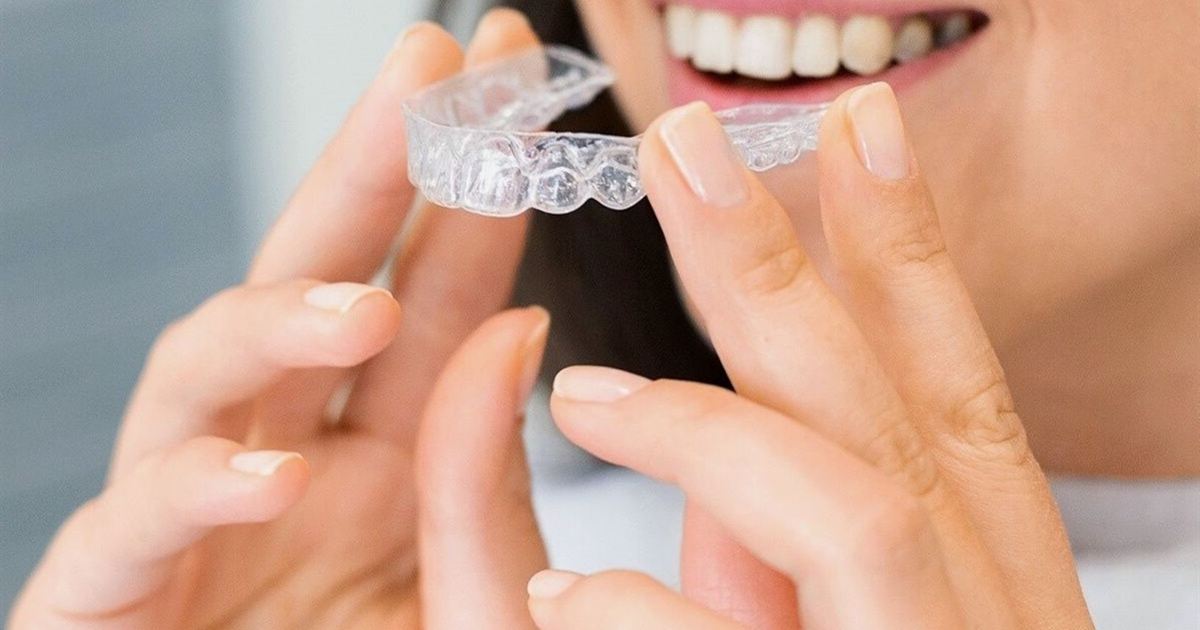
Aligners are marketed on convenience, which is fair, and it obscures the one thing that decides whether they work.
They move teeth by applying continuous gentle force. Continuous is the operative word.
Clear aligner treatment typically runs six to eighteen months depending on how much movement is needed. The single biggest factor in whether you finish on schedule is wear time, and the required twenty to twenty-two hours a day is a physical requirement rather than a target.
The Clear Aligner Treatment Timeline
Minor crowding or relapse after previous braces usually takes around six months. Moderate crowding or spacing typically runs nine to fifteen months. More complex cases involving bite correction can extend beyond eighteen months. Each tray is worn for one to two weeks before moving to the next. Add two to four weeks at the start for assessment, scanning, and manufacturing, and allow for refinement trays at the end in most cases.
Refinements are normal rather than a sign something went wrong.
Most treatment plans include them, and it is worth confirming that before you start.
Stage One: Assessment and Planning
Two to four weeks before you receive anything.
The examination checks whether aligners suit your case at all. Not everything can be treated this way, and severe crowding, significant bite discrepancies, and cases needing tooth movement through bone in particular directions often need fixed braces.
Any decay or gum disease is treated first. Moving teeth in an unhealthy mouth causes problems, and gum disease in particular progresses faster under orthodontic movement.
A digital scan and photographs are taken, plus X-rays. From these a treatment plan is built, showing the projected movement tray by tray.
You will usually see a simulation of the predicted result. It is a plan rather than a guarantee, and it is genuinely useful for deciding whether the outcome is what you want.
Manufacturing then takes a few weeks.
Stage Two: The First Trays
The first week is the most uncomfortable and it sets the pattern.
Pressure and tenderness for two to three days with each new tray, which is the teeth being moved. It eases as the tray does its work.
A lisp for a few days, resolving as your tongue adapts.
Extra saliva initially.
Removal for eating and drinking, everything except plain water. Hot drinks warp the plastic, and anything colored stains it.
Brushing before reinserting, every time. Sealing sugar or acid against your teeth for hours is how people finish aligner treatment with new cavities.
Cleaning the trays with cool water and a soft brush, never hot water or toothpaste.
Twenty to twenty-two hours a day means the trays are out only for meals and cleaning. Two hours sounds generous until you count three meals, coffee, and a snack.
What Attachments and IPR Are
Two things most people are not told about until the appointment.
Attachments are small tooth-colored bumps of composite bonded to certain teeth. They give the aligner something to grip so it can apply force in directions that a smooth tray cannot achieve, particularly rotation and vertical movement.
They are tooth-colored and they are visible up close, which surprises people expecting a fully invisible treatment. They are removed at the end and the tooth surface is polished.
IPR, interproximal reduction, is the removal of a very small amount of enamel between teeth, usually a fraction of a millimeter, to create space for alignment. It is done with a fine strip or disc and is not felt beyond mild pressure.
Ask at the consultation whether your plan includes either, and how many attachments. It changes the appearance during treatment and it is better known in advance.
Neither is a sign of a difficult case. Both are standard tools.
What Makes Treatment Take Longer
Cause
Effect
Wear time under 20 hours
The most common cause of delay by a wide margin
Skipping to the next tray early
Movement incomplete, later trays do not fit
Lost or damaged trays
Days lost, sometimes a replacement needed
Teeth not tracking as planned
Refinement trays required
Missed review appointments
Problems found late
Gum disease developing
Treatment paused
Not using chewies
Trays not fully seated, movement lags
Chewies are small soft cylinders you bite on to seat the tray fully. They look trivial and they make a measurable difference, since a tray that is not fully seated is not applying the planned force.
The honest version of the wear time issue: leaving trays out for a few hours here and there does not cause a dramatic failure. It accumulates. A pattern of eighteen hours instead of twenty-two adds months across a full course.
Our post on retainers covers what happens after treatment finishes.
Finishing and Refinements
Most cases need a second round, and this is expected.
Teeth do not always move exactly as the plan predicted. Bone responds differently between individuals, and small discrepancies accumulate across a course.
At the end of the planned trays, a new scan is taken and refinement aligners are made, usually a handful of additional trays over a few weeks or months. Most plans include one round of refinement in the original fee, and it is worth confirming that in writing before starting.
Attachments are then removed and the teeth polished.
Retainers come next and they are permanent. Teeth move back toward their original positions given the chance, and relapse after orthodontic treatment is extremely common in people who stop wearing retainers. Budget for replacements over the years.
Finishing aligner treatment without a retainer plan wastes the entire course.
FAQs About Clear Aligner Treatment
How long does clear aligner treatment take? Six to eighteen months for most cases, depending on how much movement is needed. Minor crowding or relapse can finish in around six months. Complex cases involving bite correction run longer. Wear time is the biggest variable within any given plan.
What happens if I do not wear my aligners enough? Treatment slows and the trays stop fitting properly, since each one is designed to start from where the previous one finished. Persistent under-wear leads to refinement scans, additional trays, and a longer overall course. It is the most common reason treatment overruns.
Do clear aligners hurt? Pressure and tenderness for the first two to three days with each new tray is normal and expected, easing as the teeth move. It is usually described as milder than fixed braces. Sharp pain or a tray cutting the gum should be reported rather than endured.
Are attachments visible? Yes, at close range. They are tooth-colored bumps bonded to some teeth so the aligner can grip and apply force in specific directions. They are removed at the end and the surface polished. Ask how many your plan includes before starting.
Do I need retainers after clear aligner treatment? Yes, indefinitely. Teeth drift back toward their previous positions without retention, and relapse is very common in people who stop. Retainers are usually worn full time briefly, then nightly long term. This is a permanent commitment rather than a final stage.
Find Out If Aligners Suit Your Case
Not every case is suitable for aligners, and an assessment tells you before you commit to anything.
Call (208) 356-5601 or see our orthodontics page.
Madison Park Dental, 345 N 2nd E Ste 2, Rexburg, ID 83440. Rated 4.9 stars across 229 Google reviews.
Reviewed by Dr. Matthew Griffeth, Madison Park Dental.This article is general information, not dental advice.
☏
Ready to book?To learn more or schedule an appointment, call Madison Park Dental at (208) 356-5601 or visit us at 345 N. 2ND E., Suite 2, Rexburg, ID 83440.
Matthew Griffeth
Dr. Matthew M. Griffeth is passionate about patient education and preventive care. His mission is to help patients achieve long-lasting oral health with simple, effective habits at home.
Keep Reading
Related Articles
Ready to Transform Your Smile?
To find out more about the dental services offered at Madison Park Dental, call (208) 356-5601 or schedule an online consultation. You can also visit us at 345 N. 2ND E., Suite 2, Rexburg, ID 83440.