The whitening aisle offers a dozen products, all promising the same thing, at prices ranging from a few dollars to a few hundred.
The differences come down to two variables. How strong the active ingredient is, and how well it stays in contact with the tooth.
Teeth whitening options fall into three tiers, and the right one depends on what is causing your discoloration in the first place. That is the question almost nobody asks before buying, and it determines whether anything happens at all.
Teeth Whitening Options, Ranked
Three tiers, by strength and by how well the gel stays where it needs to be. In-office whitening uses the highest concentration under professional supervision with your gums protected, and delivers the largest change in a single visit. Custom take-home trays use a lower concentration in a tray molded to your teeth, worn over one to two weeks, and reach a similar endpoint more gradually. Over-the-counter strips, pens, and generic trays use the weakest concentrations and produce a modest lift on surface staining only.
Toothpastes belong in a fourth category entirely.
They remove surface stain by abrasion rather than whitening the tooth, which is a different thing described with the same word.
Why Some Stains Never Lift
This is the section that saves people money.
Extrinsic stains sit on the outside of the enamel, from coffee, tea, red wine, tobacco, and dark foods. These respond well to whitening and often to a professional clean alone.
Intrinsic stains sit inside the tooth. Causes include tetracycline exposure in childhood, fluorosis, trauma to a tooth, and the natural yellowing of dentine as enamel thins with age. These respond partially at best, and some barely at all.
A single dark tooth usually means the nerve has died. External whitening does very little. Internal bleaching after a root canal is the option, or a veneer or crown.
Grey teeth respond worse than yellow teeth, consistently. Yellow discoloration lifts most readily.
Restorations do not whiten at all. Crowns, veneers, bonding, and fillings keep their original shade. Whiten first, then replace visible restorations to match. Doing it in the other order guarantees a mismatch, as covered in our veneers vs bonding post.
An examination tells you which category you are in before you spend anything.
In-Office Whitening
One appointment, usually sixty to ninety minutes.
Your gums and lips are isolated with a protective barrier, then a high-concentration gel is applied to the teeth, sometimes in several cycles within the appointment. Some systems use a light, and the evidence that the light adds much beyond the gel itself is mixed.
The advantages are speed and control. Several shades of change in one visit, with a professional watching for gum irritation and adjusting as it goes.
The main drawback is sensitivity. High-concentration gel produces more of it, usually for one to three days.
This suits someone with a deadline, someone whose teeth are sensitive to trays, or anyone who wants the change done rather than managed over a fortnight.
Many offices combine it with take-home trays to hold the result.
Custom Take-Home Trays
The option most dentists recommend when there is no deadline.
Impressions or a scan are taken and thin trays are made to fit your teeth precisely. You are given professional-strength gel and wear the trays for a set period daily, typically one to two weeks.
Why the custom fit matters: the tray holds the gel against the tooth surface and keeps it off the gum. Generic boil-and-bite trays leak gel onto the gum, which causes irritation and wastes the active ingredient.
Sensitivity is usually lower than in-office, since the concentration is lower and the exposure is spread out.
You keep the trays. Topping up later needs only a new syringe of gel, which makes this the cheapest option over several years.
The trade is discipline. It only works if you actually wear them.
Over-the-Counter Products
Reasonable for mild surface staining, and worth being realistic about.
Product
What to expect
Whitening strips
Modest lift on surface stain, uneven on crowded teeth
Whitening toothpaste
Removes surface stain by abrasion, does not whiten the tooth
Whitening pens
Very limited, brief contact time
Generic trays
Gel leaks onto gums, irritation common
Charcoal products
Abrasive, no whitening benefit, risks enamel wear
LED kits
The gel does the work, the light adds little
Strips are the most credible of these, and they suit mild staining on reasonably aligned front teeth. They cannot reach between overlapping teeth, which produces a patchy result on crowded ones.
Charcoal deserves the bold. It is abrasive, it removes surface stain by scrubbing, and repeated use wears enamel. Thinner enamel shows more of the yellow dentine underneath, so long-term use can make teeth look darker.
The American Dental Association maintains a seal program for whitening products worth checking before buying.
What Does Not Work and What Causes Harm
Popular advice with no benefit or an actual cost.
Lemon juice and baking soda. Acid erodes enamel, permanently. Any brightness is enamel loss.
Oil pulling. No evidence of whitening.
Hydrogen peroxide straight from the bottle. Wrong concentration, no gum protection, real risk of chemical burns.
Apple cider vinegar. Acidic. Same problem as lemon juice.
Whitening on active decay or gum disease. Gel reaching an exposed nerve through a cavity is genuinely painful. Any whitening plan should follow an examination.
Whitening when pregnant. Usually postponed, since safety data is limited rather than concerning.
Overuse is its own category. Continuous whitening past the recommended course increases sensitivity and can irritate the gum, without further shade improvement.
Whitening does not damage enamel when used as directed. Doing it repeatedly at the wrong concentration without supervision is where problems appear.
FAQs About Teeth Whitening Options
Which teeth whitening option works best? In-office whitening produces the largest change fastest, and custom take-home trays reach a comparable result over one to two weeks at lower cost and with less sensitivity. Over-the-counter strips give a modest lift on surface staining only. Which suits you depends on whether your staining is on the tooth or inside it.
Does teeth whitening damage enamel? Not when used as directed. Professional gels have been studied extensively and do not soften enamel at the concentrations and exposure times used. Harm comes from acidic home remedies, abrasive charcoal products, and repeated unsupervised use at inappropriate strengths.
Why are my teeth still yellow after whitening? Most likely intrinsic staining, meaning the discoloration is inside the tooth rather than on it. Tetracycline staining, fluorosis, trauma, and age-related dentine yellowing all respond poorly. Grey teeth lift far less readily than yellow ones. Veneers or bonding are the alternative route.
How long does teeth whitening last? It depends almost entirely on habits. Coffee, tea, red wine, and tobacco bring staining back fastest. Most people top up periodically, which is straightforward with custom trays since you keep them and only need more gel.
Will whitening work on crowns and fillings? No. Porcelain, composite, and ceramic keep their original shade regardless of the product used. Whiten your natural teeth first, then replace visible restorations to match the new shade. Reversing that order leaves a permanent mismatch.
Find Out What Will Work for You
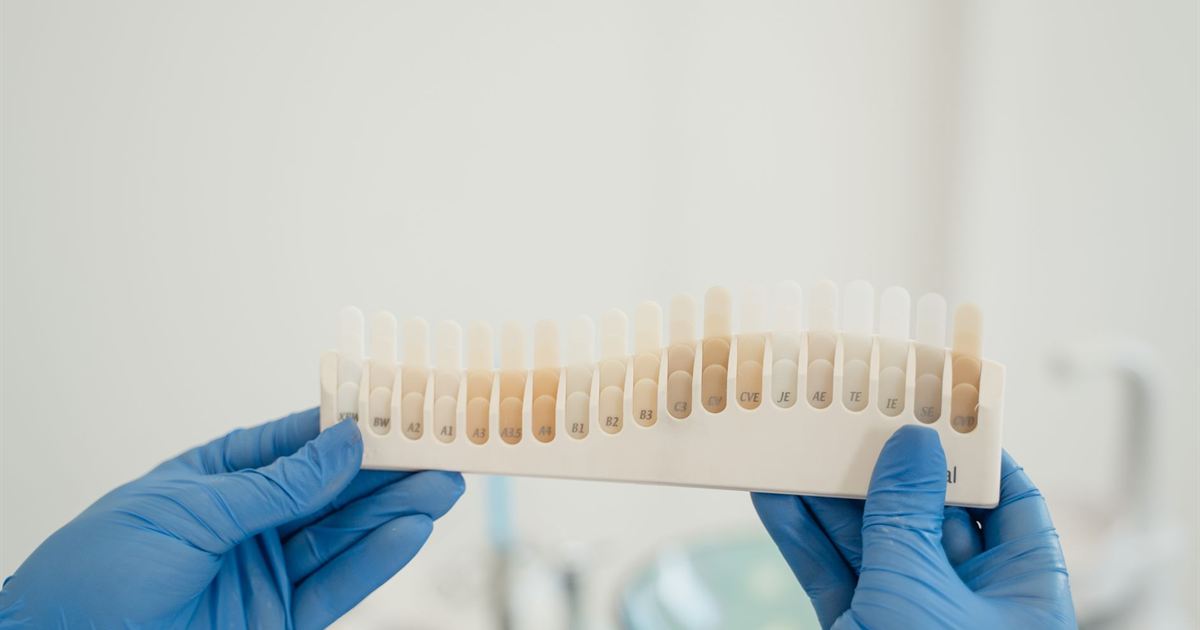
A shade assessment and an examination show whether your staining will respond before you spend anything.
Call (208) 356-5601 or see our cosmetic dentistry page.
Madison Park Dental, 345 N 2nd E Ste 2, Rexburg, ID 83440. Rated 4.9 stars across 229 Google reviews.
Reviewed by Dr. Matthew Griffeth, Madison Park Dental.This article is general information, not dental advice.
☏
Ready to book?To learn more or schedule an appointment, call Madison Park Dental at (208) 356-5601 or visit us at 345 N. 2ND E., Suite 2, Rexburg, ID 83440.
Matthew Griffeth
Dr. Matthew M. Griffeth is passionate about patient education and preventive care. His mission is to help patients achieve long-lasting oral health with simple, effective habits at home.
Keep Reading
Related Articles
Ready to Transform Your Smile?
To find out more about the dental services offered at Madison Park Dental, call (208) 356-5601 or schedule an online consultation. You can also visit us at 345 N. 2ND E., Suite 2, Rexburg, ID 83440.