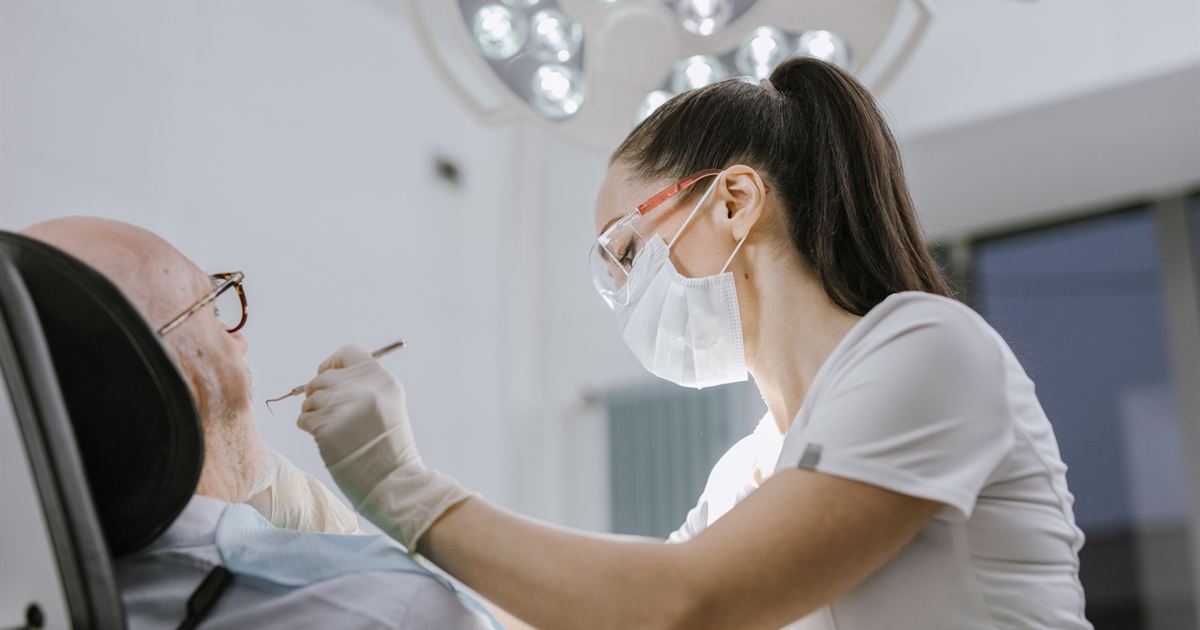
Most of the worry about crowns comes from not knowing the sequence. The word sounds major, the quote is not small, and nobody has explained what the appointment involves.
The procedure itself is routine and the discomfort is usually less than people brace for.
Getting a dental crown normally takes two appointments a couple of weeks apart. The first shapes the tooth and fits a temporary. The second removes the temporary and cements the permanent one. Here is each stage, plus what to do if the temporary comes loose.
Getting a Dental Crown, Start to Finish
The process runs in two appointments. At the first, the tooth is numbed, decay or old filling material is removed, and the tooth is shaped so a crown will fit over it. An impression or digital scan is taken, and a temporary crown is fitted. A dental laboratory makes the permanent crown, usually over two weeks. At the second appointment the temporary comes off, the fit and color are checked, and the permanent crown is cemented in place.
Some offices place same-day crowns milled on site, which compresses this into one longer visit.
Either way the underlying steps are the same. Shape the tooth, capture its dimensions, make the crown, fit it.
Why a Crown Instead of a Filling
A filling replaces missing tooth structure. A crown replaces the outer surface entirely and takes the biting load off what remains underneath.
The switch happens when there is not enough sound tooth left to hold a filling reliably.
Situations where a crown is usually recommended:
After a root canal, since the treated tooth becomes more brittle
A cracked tooth, where the crown holds the pieces together under load
A large old filling with thin walls of tooth around it
A broken cusp on a back tooth
Decay too extensive for a filling to restore predictably
Severe wear from grinding
A filling placed where a crown is needed tends to fail, and the failure often takes more tooth with it. That is the reasoning, and it is worth asking your dentist to show you on the X-ray rather than taking it on trust.
Visit One: Preparing the Tooth
Allow around an hour to ninety minutes.
Numbing. Local anesthetic first. Nothing starts until the area is fully numb, and you should say so if it is not.
Removing the damage. Old filling material and any decay comes out. Sometimes this reveals more damage than the X-ray showed, which is occasionally when a root canal enters the conversation.
Shaping. The tooth is reduced on all sides to make room for the crown. How much depends on the material, since some need more thickness than others.
Capturing the shape. Either a physical impression or a digital scan. Scans have largely replaced the tray of putty in offices that have the equipment.
Shade matching. For a visible tooth, the color is matched against a shade guide in natural light where possible.
The temporary. A provisional crown is made and cemented with soft cement designed to come off easily later.
You leave numb. Avoid chewing until sensation returns, since it is easy to bite your cheek without noticing.
Living With the Temporary
The temporary protects the shaped tooth and keeps the neighbors from shifting. It is not built to last.
Sensible habits for the two weeks:
Do
Avoid
Chew on the other side where you can
Sticky sweets, caramel, gum
Brush gently as normal
Hard foods, ice, nuts
Slide floss out sideways, not up
Pulling floss straight up past it
Call if it feels high when biting
Ignoring persistent sensitivity
Some sensitivity to cold is normal, since the shaped tooth has less insulation than it did.
If the temporary comes off, keep it and call the office. Do not leave the tooth uncovered for days. The neighboring teeth and the opposing tooth can move enough in that time to affect how the permanent crown fits.
Visit Two: Fitting the Permanent Crown
Shorter, usually thirty to forty-five minutes, and often without anesthetic.
The temporary is removed and the tooth cleaned. The new crown is tried in and assessed for three things: how it seats, how the color reads against the neighbors, and how it meets the opposing teeth.
You will be asked to bite on colored paper. Marks show where contact is heaviest, and small adjustments are made until the bite feels level.
Say something if it feels high. A crown left a fraction proud causes soreness and can crack under load. Adjusting it takes a minute at the appointment and is far more awkward once cemented.
Once everyone is satisfied, it is cemented and the excess cleaned away.
Aftercare and Making It Last
Mild sensitivity for a few days is common and settles.
Contact the office if you get pain when biting that persists past a week, ongoing sensitivity to cold that worsens, or a rough edge catching your tongue.
For the long term:
Clean the margin. Where the crown meets the tooth is where decay starts. The crown itself cannot decay; the tooth beneath it can. Brushing and flossing that line is what keeps it healthy.
Wear a nightguard if you grind. Grinding is a leading cause of crown fracture, and a guard is far cheaper than a replacement.
Skip the ice and the packaging. Opening things with your teeth ends more crowns than chewing ever does.
Keep your checkups. A margin starting to leak is caught early on an X-ray and is a small repair at that stage.
The American Dental Association has patient information on crowns worth reading alongside this.
FAQs About Getting a Dental Crown
Does getting a dental crown hurt? The appointment is done under local anesthetic and most people report pressure and vibration rather than pain. Mild soreness in the gum and sensitivity to cold for a few days afterward is common. Pain that builds over the week following, particularly when biting, is a reason to call.
How long does a crown take? Two appointments about two weeks apart, with a temporary in between. The first runs an hour to ninety minutes, the second thirty to forty-five. Offices with same-day milling can complete it in one longer visit.
What if my temporary crown falls off? Keep it, avoid chewing on that side, and call the office. It usually goes straight back on. Leaving the tooth uncovered lets the neighboring and opposing teeth shift, which can affect the fit of the permanent crown.
Can I eat normally with a crown? Once the permanent crown is cemented, yes, with the same caution you would give a natural tooth. Ice, hard candy, and using teeth as tools are what break crowns. During the temporary phase, chew on the other side.
Will people be able to tell? A well-matched porcelain or ceramic crown on a front tooth is difficult to spot. Shade matching at the first visit is what makes the difference, so it is worth doing in natural light and worth saying if the try-in looks wrong to you.
Book Your Consultation
An examination and an X-ray show whether a crown is the right call, or whether a filling would still hold.
Call (208) 356-5601 or see our crowns and bridges page.
Madison Park Dental, 345 N 2nd E Ste 2, Rexburg, ID 83440. Rated 4.9 stars across 229 Google reviews.
Reviewed by Dr. Matthew Griffeth, Madison Park Dental.This article is general information, not dental advice.
☏
Ready to book?To learn more or schedule an appointment, call Madison Park Dental at (208) 356-5601 or visit us at 345 N. 2ND E., Suite 2, Rexburg, ID 83440.
Matthew Griffeth
Dr. Matthew M. Griffeth is passionate about patient education and preventive care. His mission is to help patients achieve long-lasting oral health with simple, effective habits at home.
Keep Reading
Related Articles
Ready to Transform Your Smile?
To find out more about the dental services offered at Madison Park Dental, call (208) 356-5601 or schedule an online consultation. You can also visit us at 345 N. 2ND E., Suite 2, Rexburg, ID 83440.