

Your wisdom teeth surgery is scheduled. You’re taking Friday off, you’ve stocked up on pudding and applesauce, and now you’re wondering exactly how bad the next week is going to be. Are you going to look like a chipmunk on Sunday? Will you be back at work Monday, or will Tuesday be a stretch? When can you actually chew a sandwich again? This guide walks you through wisdom teeth recovery hour by hour and day by day, so you know what’s normal, what’s a warning sign, and what to do to speed the whole thing up.
You’ll get the honest timeline from most patients, the swelling curve (peak day 3, gone by day 7), the food progression from clear liquids to solid meals, when the stitches come out or dissolve, and the two biggest mistakes patients make in the first 72 hours that cause dry socket. You’ll learn when to call your oral surgeon and when to just wait it out.
The Short Answer on Wisdom Teeth Recovery Time
Most patients feel roughly normal by day 4 or 5 and are back at desk work by day 3. Physical jobs, jaw-heavy chewing, and full exercise are best held off until day 7 to 10. Full soft-tissue healing takes 2 weeks. Full bone healing under the sockets takes 3 to 6 months, though you won’t feel that.
Simple extraction of an already-erupted wisdom tooth recovers faster (3 to 5 days). Surgical removal of impacted or bone-covered wisdom teeth takes longer (7 to 10 days). Removing all four at once is the most common approach and adds 1 to 2 days to the recovery curve.
The Surgery Itself in Plain Language
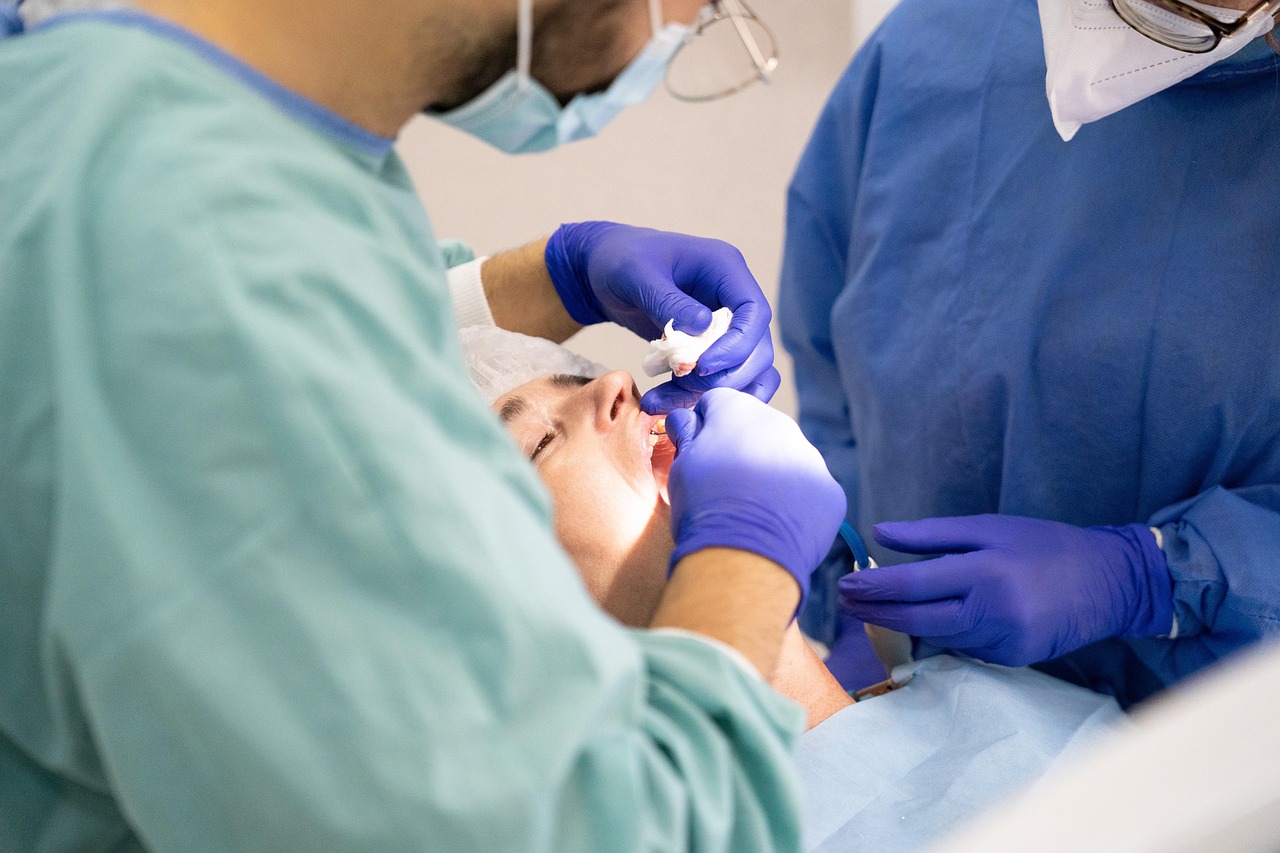
Most wisdom tooth removals happen under IV sedation or general anesthesia at an oral surgeon’s office. You show up fasting, get an IV, and the next thing you remember is being helped to the recovery room 45 to 90 minutes later. The surgeon removes each tooth by widening the socket, sectioning the tooth if needed, and gently rocking it out. If the tooth was under bone, a small amount of bone is trimmed away first. Stitches close the wound if the site needed a flap.
Our team handles these cases through oral surgery at Madison Park Dental. The first 24 hours after surgery are the most important for how the rest of the week goes.
Hour 0 to 6: The First Afternoon
You wake up groggy and numb. You have gauze pads packed into each socket. The nurse checks that you can walk and hands you a printed aftercare sheet. A friend or family member drives you home. You can’t drive for 24 hours after sedation.
Once home:
- Bite firmly on the gauze for 30 to 45 minutes at a time
- Replace gauze every 30 to 45 minutes until bleeding slows to pink saliva (usually 2 to 4 hours)
- Take your first pain med before the local anesthetic wears off (around hour 3 to 4)
- Ice pack on the outside of your jaw, 20 minutes on, 20 minutes off
- Sleep with your head propped up on 2 pillows to reduce swelling
Do not: rinse your mouth, drink through a straw, smoke, spit forcefully, or touch the sockets with your tongue or fingers. Any of these can dislodge the healing blood clot and cause dry socket.
Day 1: The Day After Surgery
You wake up with mild to moderate soreness, some cheek swelling, and a stiff jaw. Bleeding should be minimal by now, mostly pink-tinged saliva when you spit lightly. If you’re still bleeding actively, bite on a damp tea bag for 30 minutes: the tannins help clot formation.
Food on day 1: cold and soft. Yogurt, applesauce, smoothies (spoon, no straw), mashed banana, room-temperature soup, ice cream, protein shake. Room temp or cold, never hot. Hot foods dilate blood vessels and can restart bleeding.
Pain meds: alternate ibuprofen 600mg every 6 hours with acetaminophen 500mg every 6 hours (offset by 3 hours). This combination is stronger than most opioids for dental pain according to the ADA’s official pain management guidance. Set alarms so you don’t wake up in pain.
Day 2 to 3: Peak Swelling
This is when you look most like a chipmunk. Swelling peaks on day 2 or 3, usually with the most puffiness in the morning. Bruising (yellow or purple) can show up on your jaw or neck. Both are normal and fade by day 6 or 7.
Switch from ice to warm compresses starting day 3. Warmth helps the swelling drain. 20 minutes on, 20 minutes off, throughout the day.
Start gentle salt water rinses on day 2. A quarter teaspoon of salt in 8 ounces of warm water, swished gently (do not spit forcefully) after every meal and before bed. This keeps the sockets clean and speeds healing.
Food day 2 to 3: soft cooked foods. Scrambled eggs, mashed potatoes, oatmeal, well-cooked pasta, tender fish, refried beans. Chew on the opposite side of your mouth. Keep the sockets clear of packed food.
Day 4 to 5: The Turnaround
Most patients report a big improvement on day 4. Swelling starts going down. Jaw stiffness eases. You can taper the pain meds to just morning and night, or drop them entirely if pain is mild. Bruising is fading.
You can start eating slightly firmer soft foods: soft bread, well-cooked vegetables, meatballs, ground meat, soft fruit. Still avoid anything crunchy, chewy, or with small seeds that can lodge in the sockets.
Most desk-job patients return to work on day 3, 4, or 5. If you have a physical job, wait until day 7 to 10.
Day 6 to 10: Back to Normal
By day 7, most patients feel normal. Swelling is gone. Bruising is faded to yellow or gone entirely. You can open your mouth wide again. You can eat normal food, just avoid biting directly on the extraction sites for another week or two.
Non-dissolving stitches come out on day 7 to 10 at a quick follow-up visit (5 minutes). Dissolving stitches disappear on their own between day 10 and day 21. Don’t pick at them.
You can resume light exercise on day 5, moderate exercise on day 7, and full workouts on day 10. Rinsing the sockets with salt water after every meal continues for a full 2 weeks to prevent food packing.
Recovery Timeline Table
| Day | Swelling | Pain Level | Food | Activity |
|---|---|---|---|---|
| 0 (surgery day) | Starting | Numb then moderate | Cold liquids only | Rest, no activity |
| 1 | Mild to moderate | Moderate | Cold and soft (yogurt, smoothies) | Rest, gentle walking |
| 2 to 3 | Peak | Moderate | Warm soft foods (eggs, mashed potatoes) | Rest, no lifting |
| 4 to 5 | Reducing | Mild | Soft solids (pasta, ground meat) | Desk work OK |
| 6 to 7 | Mostly gone | Very mild | Normal soft foods | Light exercise OK |
| 8 to 10 | Gone | None to occasional | Almost everything | Return to full activity |
| 14 | None | None | Everything, chew normally | Fully back to normal |
Dry Socket: The One Thing You Really Want to Avoid
Dry socket happens when the healing blood clot in the socket dislodges or dissolves before the bone underneath has a chance to heal. It exposes bone to air, food, and bacteria. Pain hits about 72 hours after surgery, is throbbing and radiates to the ear or jaw, and doesn’t respond well to normal pain meds.
Roughly 2 to 5 percent of routine extractions develop dry socket. That number jumps to 10 to 30 percent for smokers, and about 20 percent for impacted lower wisdom teeth. It’s not dangerous but it’s genuinely painful and adds a few days to your recovery.
The three biggest triggers for dry socket, per the American Association of Oral and Maxillofacial Surgeons’ patient education on wisdom teeth:
- Smoking or vaping in the first 72 hours (the suction dislodges the clot)
- Drinking through a straw
- Vigorous rinsing or spitting in the first 24 hours
If you develop dry socket, call the office. Treatment is a medicated dressing packed into the socket. Relief comes within 20 minutes. You may need 2 or 3 dressing changes over the following week.
What Foods to Eat and Avoid Week by Week
Stock your kitchen before surgery. Here’s a real progression:
Day 0 to 1: yogurt, applesauce, cottage cheese, smoothies (spoon, not straw), pudding, room-temp soup, ice cream (not with chunks), protein shake, mashed banana.
Day 2 to 3: add scrambled eggs, mashed potatoes, oatmeal, well-cooked pasta, refried beans, soft-cooked fish, ricotta cheese, silken tofu.
Day 4 to 5: add soft bread (not toast), meatballs, ground meat, well-cooked vegetables, ripe soft fruit (mango, papaya), soft casseroles.
Day 6 to 10: most foods return, chew on the opposite side of the mouth. Still avoid: popcorn, nuts, chips, crusty bread, steak, anything with small seeds (strawberry, raspberry, sesame seed).
Week 2 to 4: everything, but continue to rinse after meals to keep the sockets clean until they’re fully closed over.
Pain Management That Works
Recent studies (including from the American Dental Association) show that alternating ibuprofen and acetaminophen is more effective for dental pain than opioids in most patients. The typical protocol:
- Ibuprofen 400 to 600mg every 6 hours (max 2400mg per day)
- Acetaminophen 500mg every 6 hours (max 3000mg per day)
- Offset by 3 hours: ibuprofen at 12 pm, acetaminophen at 3 pm, ibuprofen at 6 pm, acetaminophen at 9 pm, and so on
- Take with food to protect your stomach
Some surgeons prescribe a small amount of an opioid pain medicine as a backup for the first night. Use it only if you need it. Most patients don’t touch the bottle.
When to Call the Office
Some soreness, swelling, and bruising are normal. These signs are not, and you should call the office (or if after hours, go to the ER):
- Bleeding that soaks through gauze after 4 hours of pressure
- Severe pain that gets worse (not better) between day 3 and day 5
- Fever over 101 F, especially after day 2
- Trouble opening your mouth at all after day 5
- Numbness in your lip or chin lasting more than 24 hours after surgery
- Swelling in your neck that’s making it hard to swallow or breathe
- Pus or a bad taste from the socket after day 4
Most of these are rare but need attention right away. If you’re not sure whether what you’re feeling qualifies, our post on what counts as a dental emergency spells out when to call and when to head straight in.
Frequently Asked Questions
How long before I can go back to work?
Most desk-job patients return day 3 or 4 without issue. Physical jobs (lifting, construction, warehouse) should wait until day 7 to 10 to avoid restarting bleeding. Public-facing jobs where you’re on camera or meeting clients may want to wait through day 5 or 6, giving swelling time to fully resolve.
When can I brush my teeth normally?
You can brush the rest of your teeth on day 1, avoiding the extraction sites. Gentle brushing around the sockets starts on day 3 or 4 with a soft-bristled brush. Full normal brushing across all teeth returns on day 7 to 10. Do not use electric brush directly on the surgical area until day 14.
Is it normal for the socket to look white or yellow?
Yes. Around day 3 to 5, the healing tissue in the socket often looks white, yellow, or gray. This is granulation tissue, the body’s healing scaffold. It’s not infection. It’s not food stuck. Do not try to pick it out. It fades to normal pink over the following week.
Can I drink coffee after surgery?
Room-temperature or iced coffee, from a cup (never a straw), starting day 2. Hot coffee should wait until day 4 or 5 since heat can restart bleeding. Skip caffeine on day 1 since it can dehydrate you and interact with pain meds. Iced tea is fine day 2 forward, same no-straw rule.
How long does jaw stiffness last?
Mild jaw stiffness (called trismus) is normal for 5 to 10 days. Gentle jaw opening exercises starting day 3 help. Open as wide as you comfortably can, hold 5 seconds, close, and repeat 10 times, 3 times a day. Full range of motion usually returns by day 14. If it hasn’t, call the office.
When can I smoke or vape again?
Honestly, waiting until day 7 minimum. Every day you can push it further reduces your dry socket risk. Nicotine constricts blood vessels and slows healing. Many patients use surgery as a chance to quit. If you can’t wait, day 5 is the absolute minimum, and dry socket risk stays elevated even then.
Do stitches need to be removed?
It depends on the type. Non-dissolving stitches come out at a 5-minute follow-up visit around day 7 to 10. Dissolving stitches (most surgeons use these now) fall out on their own between day 10 and day 21. If you see stitch pieces in your mouth on day 15, that’s normal.
The Bottom Line
Wisdom teeth recovery follows a predictable curve. Rough on day 1 and 2, peak swelling on day 3, big turnaround on day 4 or 5, mostly back to normal by day 7. Follow the aftercare instructions closely for the first 72 hours to keep dry socket risk low. Rinse gently, eat soft foods, take your pain meds on schedule, and avoid straws and smoking.
If your wisdom teeth are giving you trouble and you’re weighing whether to have them out, book a consultation with Madison Park Dental. We’ll take a panoramic x-ray, walk you through what removal would involve for your specific teeth, and give you a straight answer on whether you should have them out now or watch and wait. Call the office to schedule.