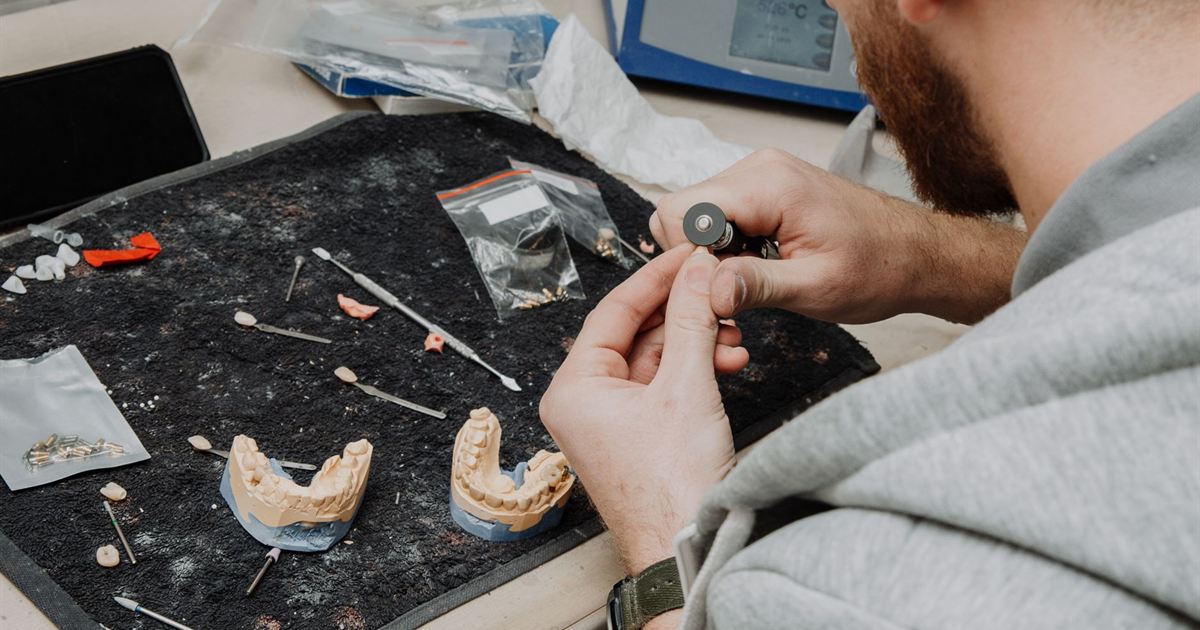
The dentures that fitted perfectly three years ago now need adhesive, move when you talk, and rub in a spot that will not settle.
Nothing has gone wrong with them. The ridge underneath has changed.
A denture reline resurfaces the fitting side of the denture to match the current shape of your gums. It is a routine, relatively quick procedure, and most people leave it far too long since the change happens slowly enough to feel normal.
What a Denture Reline Does
A reline adds a new layer of material to the surface of the denture that sits against your gum, recontouring it to match the ridge as it is now. The teeth and the outer body of the denture are unchanged. It restores suction, stability, and comfort without remaking the denture. Relines are needed since the bone under the gum resorbs continuously after teeth are lost, so the ridge that the denture was made to fit gradually flattens.
That bone loss is normal and it does not stop.
It is fastest in the first year after extractions and continues slowly for life.
Signs You Need One
Most of these develop gradually enough to be accommodated rather than noticed.
Needing more adhesive than you used to, or any at all if you did not before
The denture moving when you talk, laugh, or eat
Sore spots appearing in new places, or a general ache after wearing
Food trapping underneath regularly
Clicking when you speak
A change in your face, with the lower third looking shorter
Difficulty with foods you used to manage
The adhesive one is the clearest signal. Adhesive is meant to add confidence to a denture that already fits. When it is doing the holding, the fit has gone. Our post on denture care covers correct adhesive use.
Wearing a loose denture is not simply uncomfortable. It loads the ridge unevenly, which accelerates the bone loss causing the problem.
Reline, Rebase or Remake
Three different procedures, frequently confused.
Procedure
What happens
Typical use
Soft reline
A cushioning material added to the fitting surface
Chairside relines are faster and the material used is usually less durable than a laboratory one. Laboratory relines mean going without the denture for a period, and many offices provide a temporary or work same-day where possible.
Ask which is being proposed and why. Both are legitimate and they suit different situations.
A remake becomes the better answer once the teeth are worn flat, the bite has changed significantly, or the denture has been relined several times already.
Repairs for Cracks and Breaks
Different problem, different fix.
A crack in the base usually means the denture is flexing, which usually means the fit has changed. Repairing the crack without addressing the fit means it cracks again. Ask for both.
A clean break into two pieces can often be repaired, usually within a day. Keep every fragment and do not attempt to fit them together with adhesive.
A tooth off the denture is normally straightforward to reattach if you have it.
A broken clasp on a partial denture is repairable, sometimes needing a new cast framework depending on the damage.
Multiple previous repairs on the same denture is a signal that a remake is due, since each repair line is a weak point.
Bring the denture and all pieces to the office rather than attempting anything first. That single decision determines whether a repair is simple or impossible.
Why Home Repair Kits Cause Damage
Sold in pharmacies, and they cause a specific and avoidable set of problems.
Home reline kits apply a layer of material without any reference to how your bite meets or where the pressure falls. The result frequently alters the bite, creates new pressure points, and traps bacteria in an unsealed surface. It has to be ground off before a proper reline can be done, which occasionally damages the denture.
Superglue on a broken denture is the worse one. It is toxic in the mouth, it sets before the pieces are correctly aligned, and it makes a professional repair far harder or impossible. A denture that could have been repaired in a day becomes a remake.
Filing a sore spot yourself removes material that cannot be replaced and usually shifts the pressure elsewhere rather than relieving it.
The pattern is the same across all three. A cheap intervention converts a routine fix into an expensive one.
Temporary repair kits marketed for emergencies are acceptable purely to get through a weekend, and the appointment still needs to happen.
How Often This Is Needed
There is no fixed schedule and there are reliable patterns.
After extractions, bone changes fastest in the first year. Immediate dentures usually need relining within six to twelve months, sometimes sooner.
Established denture wearers commonly need a reline every few years, and it varies considerably between individuals.
Full dentures need remaking periodically, since the teeth wear down and the fit accumulates changes beyond what relining corrects.
Annual checkups are how this gets caught before it becomes uncomfortable. The examination checks fit, tissue health, bone changes, and includes an oral cancer screening.
Attending yearly with no natural teeth feels unnecessary and it is the single thing that keeps dentures comfortable and catches tissue problems early, which are usually painless at the stage they are treatable.
The American College of Prosthodontists publishes guidance on denture maintenance intervals.
FAQs About Denture Relines
How do I know if I need a denture reline? The clearest signs are needing more adhesive than before, the denture moving when you talk or eat, new sore spots, food trapping underneath, and clicking when you speak. These develop gradually, so most people accommodate them for a long time before mentioning it.
How long does a denture reline take? A chairside reline is usually done in a single appointment, often within an hour. A laboratory reline gives a more durable result and means being without the denture for a day or two, though many offices can arrange a same-day turnaround or a temporary.
Can I reline my dentures at home? Home kits are available and they cause problems. They apply material without reference to your bite, frequently create new pressure points, and have to be removed before a proper reline can be done. Use them only as a stopgap before an appointment.
How often do dentures need relining? It varies. Immediate dentures fitted after extractions usually need one within the first year as the ridge changes fastest. Established wearers typically need one every few years. An annual check is what identifies the right moment.
Is a reline cheaper than new dentures? Considerably, which is why catching the need early matters. A denture left loose for years wears unevenly, the teeth abrade, and the ridge underneath is damaged by uneven loading, at which point a remake becomes the only option.
Book a Fit Check
If you are using more adhesive than you used to, that is the appointment to make.
Call (208) 356-5601 or see our dentures page.
Madison Park Dental, 345 N 2nd E Ste 2, Rexburg, ID 83440. Rated 4.9 stars across 229 Google reviews.
Reviewed by Dr. Matthew Griffeth, Madison Park Dental.This article is general information, not dental advice.
☏
Ready to book?To learn more or schedule an appointment, call Madison Park Dental at (208) 356-5601 or visit us at 345 N. 2ND E., Suite 2, Rexburg, ID 83440.
Matthew Griffeth
Dr. Matthew M. Griffeth is passionate about patient education and preventive care. His mission is to help patients achieve long-lasting oral health with simple, effective habits at home.
Keep Reading
Related Articles
Ready to Transform Your Smile?
To find out more about the dental services offered at Madison Park Dental, call (208) 356-5601 or schedule an online consultation. You can also visit us at 345 N. 2ND E., Suite 2, Rexburg, ID 83440.