

You’ve noticed your bottom teeth are shifting, or a small gap has opened up between your front teeth over the years, or your bite has never felt quite right and you’re finally thinking about doing something about it. The two main paths are clear aligners (like Invisalign) or traditional braces. Both work well for adults. But they differ in how long they take, how much they cost, how noticeable they are at work, and how much you have to think about them day to day.
This guide compares them honestly: the cost breakdown, the real timeline, the comfort difference, and which situations make one option better than the other. You’ll see which cases aligners can’t handle, and which cases braces are actually overkill for.
The Short Answer
Clear aligners cost $3,500 to $6,500 and take 6 to 18 months for most adult cases. Nearly invisible, removable for eating, harder on people who forget to wear them.
Traditional metal braces cost $3,000 to $6,000 and take 12 to 24 months. Visible, always on your teeth, no compliance issue.
For mild to moderate crowding, gaps, and cosmetic cases, aligners are usually the better fit for adult life. For complex bite issues, rotations of premolars, or major jaw discrepancies, braces still win.
What Clear Aligners Actually Are
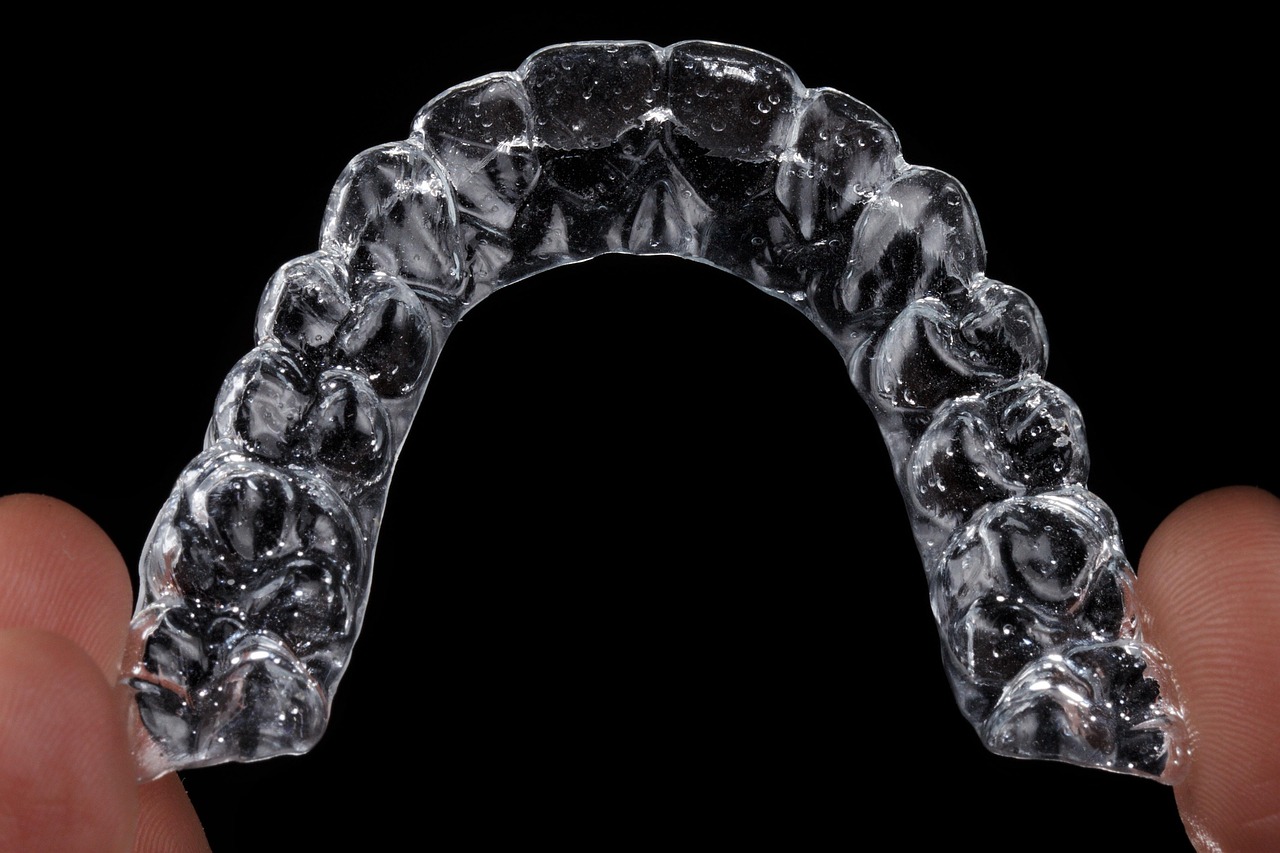
Clear aligners are a series of custom-made plastic trays that fit over your teeth. Each tray moves your teeth a tiny amount (about 0.25 mm). You wear each tray for 1 to 2 weeks then switch to the next. A typical adult case uses 20 to 40 trays.
You wear them 22 hours a day, removing them only to eat, drink anything but water, brush, and floss. Compliance is the whole game with aligners. Skip too many hours per day and treatment stalls or fails.
Our team’s clear aligners program handles both Invisalign and other established aligner brands and walks you through what’s realistic for your specific bite.
What Traditional Braces Actually Are
Metal or ceramic brackets bonded to each tooth, connected by a thin archwire. The wire pulls your teeth into position over time. Your orthodontist adjusts the wire every 4 to 8 weeks.
You wear them 24 hours a day. There’s no removal. You brush around them, floss with special threaders, and avoid certain foods (sticky, chewy, hard). Compliance isn’t an issue since you can’t take them off.
Modern braces have gotten smaller, less visible, and use gentler forces than the braces from 20 years ago. Ceramic (tooth-colored) brackets are much less noticeable than metal.
Head-to-Head Comparison Table
| Factor | Clear Aligners | Metal Braces | Ceramic Braces |
|---|---|---|---|
| Cost (adult case) | $3,500 to $6,500 | $3,000 to $6,000 | $4,000 to $7,000 |
| Treatment time | 6 to 18 months | 12 to 24 months | 12 to 24 months |
| Visibility | Nearly invisible | Very visible | Somewhat visible |
| Removable | Yes, for meals | No | No |
| Eating restrictions | None (aligners out) | Many (no sticky, no crunchy) | Many |
| Office visits | Every 6 to 10 weeks | Every 4 to 6 weeks | Every 4 to 6 weeks |
| Compliance required | High (22 hr/day) | None (always on) | None |
| Discomfort level | Mild pressure day 1 to 3 of each tray | Sore days after each adjustment | Sore after adjustments |
| Best for | Mild to moderate cases, adult life | Complex cases, teens, compliance concerns | Complex cases, cosmetic-conscious adults |
Real Cost Breakdown for Adults
Adult ortho pricing depends on case complexity and geography. Here’s what typical cases look like:
Clear aligners:
- Simple case (minor crowding, 10 to 20 trays): $3,500 to $4,500
- Moderate case (rotations, gaps, 20 to 40 trays): $4,500 to $6,500
- Complex case (bite correction, extractions, 40+ trays): $6,500 to $8,500
- Refinements (extra trays after main treatment): $500 to $1,000
- Retainers after treatment: $300 to $500 per set
Metal braces:
- Simple case: $3,000 to $4,000
- Moderate case: $4,000 to $5,000
- Complex case: $5,000 to $6,500
- Retainers after treatment: $300 to $500 per set
Ceramic braces run about $500 to $1,000 more than metal for the same case complexity.
Insurance coverage: adult ortho is often not covered on basic dental plans. Some PPO plans have a lifetime ortho maximum of $1,500 to $3,000 that applies to any age. Ask before you assume you’ll pay full price.
Treatment Timeline: What to Expect
Clear aligner treatment often finishes faster than braces. Trays can move teeth in more precise increments and there’s less friction than with brackets and wire.
- Simple aligner case (small gaps or minor crowding): 4 to 8 months
- Moderate aligner case: 9 to 15 months
- Complex aligner case: 15 to 24 months
- Metal braces simple: 12 to 15 months
- Metal braces moderate: 15 to 20 months
- Metal braces complex: 20 to 30 months
The aligner-versus-braces time gap is real but not huge. Where aligners really win time is with the office visits: every 6 to 10 weeks with aligners versus every 4 to 6 weeks with braces. Over 18 months that’s 6 fewer trips to the office.
The American Association of Orthodontists’ adult orthodontic education gives helpful context on realistic timelines and what treatment length depends on.
Comfort Reality: What They Actually Feel Like
Aligners: mild pressure and sometimes soreness for 1 to 3 days after switching to a new tray. Most patients describe it as “aware of my teeth” rather than pain. Ibuprofen handles it if needed. No lip or cheek irritation since the trays are smooth.
Braces: soreness for 2 to 4 days after each monthly adjustment. Cheek and lip irritation from the brackets is common for the first 2 weeks until scar tissue forms inside the mouth. Ortho wax on the sharp spots helps. Some patients develop small sores that heal in a week.
Speech: aligners cause a mild lisp for 3 to 7 days after starting. It resolves as your tongue adapts. Braces rarely affect speech.
Cases Where Aligners Are the Clear Winner
Aligners are the honest recommendation for these situations:
- Mild to moderate crowding
- Small gaps between teeth
- Front teeth that have shifted slightly over the years
- Cosmetic-only corrections
- Adults in client-facing jobs where braces would be a real issue
- Adults who want to enjoy food without restrictions
- Post-braces relapse cases (very common in adults who had braces as teens)
For most adult ortho patients, this is the majority of cases. Aligners handle it well.
Cases Where Braces Still Win
Braces remain the smarter pick in these situations:
- Severe crowding (teeth 4+ mm out of position)
- Major bite corrections (overbite or underbite of significant depth)
- Cases needing extractions and space closure
- Rotations of premolars or molars greater than 20 degrees
- Cases where the patient can’t reliably wear aligners 22 hours a day
- Teens where compliance is uncertain
A good orthodontist will show you where each option stands for your specific case. If you get pushed toward one without a clear reason, ask for the other’s treatment plan for comparison.
Social and Work Comfort
This is where aligners have the biggest edge for adults. In a work meeting, on a video call, at a wedding, at a first date, aligners are nearly invisible. Most people don’t notice at conversation distance. Ceramic braces are less visible than metal but still visible up close.
Eating out is different too. With aligners, you take them out, eat and drink normally, brush, put them back. With braces, food gets stuck. Sticky and hard foods are off-limits. You often need to excuse yourself to clean up after meals.
For adults in client-facing work or high-social-visibility jobs, aligners are usually worth the compliance responsibility.
What Happens After Treatment
Both options end the same way: retainers. Teeth naturally want to shift back to their original positions. Retainers hold your teeth in the new position for life. Skip the retainer and expect movement to start within months.
Retainer options:
- Clear plastic (similar to aligners): wear at night, replace every 3 to 5 years, $300 to $500 per set
- Traditional Hawley (wire and acrylic): more durable, wear at night, replace every 5 to 10 years, $400 to $600 per set
- Fixed retainer (thin wire bonded behind front teeth): stays 24/7, no daily thought needed, $250 to $500 per arch
Many patients use a fixed retainer on the front lower teeth (the most prone to shifting) plus removable clear retainers on top. Best of both worlds.
What the Consultation Should Cover
A proper adult ortho consult should include:
- Digital scan or impressions of your teeth
- Panoramic and cephalometric x-rays
- Bite analysis and photos
- Treatment options for both aligners and braces with pros and cons
- Estimated timeline for each
- All-in written quote for each option
- Explanation of what’s included (refinements, retainers, follow-ups)
Our team handles more complex orthodontic clear aligner cases for adult patients with bite corrections and multi-tooth movement, alongside the routine cosmetic cases.
Frequently Asked Questions
Are clear aligners as effective as braces?
For most mild to moderate adult cases, yes. Clear aligners have gotten significantly more capable over the last 10 years and now handle most cases braces used to require. Very complex cases (severe rotations, deep bite correction, extractions) still favor braces. Ask your orthodontist to show you the specific tooth movements aligners can and can’t do for your bite.
How many hours a day do I really need to wear aligners?
22 hours minimum, every day. That leaves 2 hours for meals, brushing, and quick removal. Wearing them less than 22 hours a day slows down movement and can require extra trays or extend treatment. Compliance is the number one reason aligner treatment fails or extends.
Can I drink coffee with aligners in?
Only cold water. Hot coffee warps the plastic. Coffee, tea, wine, and soda stain aligners quickly. Take them out for any beverage other than water, then brush teeth or at least rinse before putting them back. Failing to do this leaves food and sugar trapped against your teeth for hours: hello, cavities. Our post on why dental cleanings every 6 months matter covers why patients in aligners need to stay on schedule.
Do braces hurt more than aligners?
Slightly more on average. Braces cause sharp cheek irritation from brackets and 3 to 4 days of soreness after each monthly adjustment. Aligners cause milder soreness for 1 to 3 days after each new tray. Both are manageable with ibuprofen. Neither is unbearable for most adult patients.
Can I get aligners for just my front teeth?
Yes. Some aligner programs (like Invisalign Express or similar limited treatments) focus only on the front 6 to 10 teeth. Cost is lower ($2,500 to $4,000) and treatment is faster (3 to 6 months). Best for minor cosmetic corrections. Not appropriate if your back teeth need to move to fix your bite.
What happens if I lose an aligner?
Go back to the previous tray if you have it, and call the office. Most orthodontists can order a replacement for $100 to $200. Wearing the previous tray keeps your teeth in position during the wait. Skipping ahead to the next tray without wearing the current one is a bad idea and often causes tracking issues.
Are mail-order aligners like SmileDirectClub safe?
They’re cheaper but skip a critical step: an in-person exam by a dentist or orthodontist. This means underlying gum disease, bite issues, or hidden decay can go undetected. Cases done without proper monitoring have a higher rate of tooth root damage, gum recession, and bite problems. For adult ortho, an in-person supervised aligner treatment is worth the extra cost.
The Bottom Line
Clear aligners work well for most adult cases (mild to moderate crowding, gaps, cosmetic corrections) and fit adult life better than braces do. Traditional braces still win for complex bite corrections, major rotations, and cases where compliance would be an issue. Cost is comparable. Time is faster with aligners. Comfort and appearance heavily favor aligners.
If you want a straight recommendation for your case with quotes for both options, book a consultation with Madison Park Dental. We’ll take the scans and x-rays, walk you through what each option would look like on your teeth, and give you written estimates side by side. Call the office to schedule.